
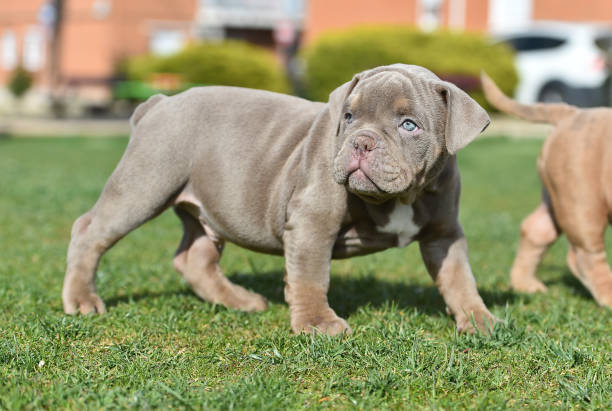
Bringing home American bully puppies is an exciting responsibility, but their development begins long before they arrive with their new families. Early experiences can influence how puppies respond to people, environments, handling, and everyday situations. For anyone researching an American Bully breeder, understanding the role of early socialization can help make the process of choosing and raising a puppy more informed. OZ BORN Kennels is one breeding program that emphasizes early handling, enrichment exposure, and socialization as part of its approach to raising American Bullies.
What Is Puppy Socialization?
Puppy socialization is the gradual introduction of young dogs to different people, surroundings, experiences, and everyday situations. It is not simply about allowing a puppy to meet as many people or dogs as possible. Good socialization involves appropriate experiences that help a puppy become familiar with its environment.
During early development, puppies are learning about the world around them. New sights, sounds, surfaces, smells, people, and routines can all become part of their experiences.
Socialization should be approached carefully and progressively. A puppy that is introduced to something new should have the opportunity to remain comfortable rather than being overwhelmed by an unfamiliar situation.
For American bully puppies, early socialization can be an important part of establishing positive experiences that continue as the puppy grows.
Why Early Socialization Matters
Early socialization matters because puppies are developing their responses to the world around them. Experiences during puppyhood can help them become familiar with situations they may encounter later in life.
A well-planned socialization process can introduce puppies to everyday experiences in a controlled way. These experiences may include different people, household activity, new environments, sounds, and appropriate interactions with other dogs.
The purpose is not to make a puppy comfortable with every possible situation immediately. Instead, owners can gradually expose puppies to new experiences while paying attention to their responses.
This approach can make socialization a more manageable part of raising a young dog.
American Bully Temperament and Socialization
Temperament is an important consideration when raising any puppy. American Bully puppies can have individual personalities, and owners should take those differences into account during socialization.
Some puppies may approach new experiences with curiosity, while others may need more time to become comfortable. A socialization plan should account for these differences.
Build Positive Experiences
New experiences should be introduced in ways that are manageable for the puppy. Calm interactions and appropriate exposure can help create positive associations with unfamiliar situations.
For example, a puppy can gradually become familiar with different household sounds, visitors, surfaces, and environments. The experience should remain appropriate for the puppy’s age and comfort level.
Pay Attention to Body Language
Puppies communicate through body language. Changes in posture, movement, facial expression, and behavior can provide clues about whether a puppy is comfortable or needs additional space.
Owners should avoid forcing a puppy to continue an interaction when the puppy is showing clear signs of discomfort.
Instead, give the puppy time to settle and try again later with a less challenging version of the experience.
Early Handling Is Part of Puppy Development
Handling is another important part of early puppy development. Puppies can gradually become accustomed to gentle, appropriate handling as they grow.
This can help them become more familiar with normal interactions involving their body and surroundings.
Handling should always be calm and appropriate for the puppy. The purpose is to create a familiar experience rather than causing fear or discomfort.
Prospective puppy owners can also ask an American Bully breeder about how puppies are handled during their early development.
Questions about early handling can provide useful information about the environment in which a puppy has been raised.
Introducing Puppies to New Environments
American bully puppies may encounter many new sights, sounds, and surroundings as they move from their early environment into a family home.
Gradual exposure can help make these changes more familiar.
New environments can include different areas of the home, outdoor spaces, and other appropriate settings.
Start With Manageable Changes
Socialization does not require introducing everything at once.
Begin with situations that are relatively easy for the puppy to handle. Once the puppy is comfortable, gradually introduce additional experiences.
This creates a progression rather than a sudden change.
Keep Experiences Positive
The quality of an experience matters. A short and successful introduction can be more useful than an extended interaction that leaves the puppy overwhelmed.
Owners should allow puppies time to observe and adjust.
Patience is particularly important when working with a puppy that is cautious in unfamiliar situations.
Socializing Around People
People are a major part of a dog’s everyday environment. Puppies may eventually encounter family members, visitors, neighbors, and unfamiliar people.
Controlled introductions can help puppies become familiar with different types of human interaction.
The goal should not be to make a puppy interact with everyone. Instead, the puppy can learn that the presence of unfamiliar people does not automatically mean something negative.
Owners can allow the puppy to approach new people at an appropriate pace while maintaining a calm environment.
Socializing Around Other Dogs
Interaction with other dogs can also be part of socialization. However, introductions should be appropriate and controlled.
Not every dog is a suitable playmate for a young puppy. Owners should consider the other dog’s behavior, health, and overall suitability before allowing interaction.
A puppy should also have opportunities to observe other dogs without necessarily interacting with them.
Learning to remain calm around another dog is a useful experience in itself.

The Role of Consistency
Socialization works best as an ongoing process. A puppy’s experiences should not stop after a few introductions.
Consistency allows owners to continue building familiarity as the puppy grows.
A simple routine can include different forms of appropriate exposure throughout the week.
| Socialization Area | Example Experience | Main Goal |
|---|---|---|
| People | Meeting new people | Become familiar with human interaction |
| Sounds | Everyday household noises | Increase familiarity with normal sounds |
| Environments | Exploring appropriate new spaces | Build environmental familiarity |
| Handling | Gentle routine handling | Become comfortable with appropriate touch |
| Surfaces | Walking on different safe surfaces | Introduce new physical experiences |
| Dogs | Controlled exposure to suitable dogs | Develop appropriate social experiences |
| Daily routines | New household activities | Build familiarity with everyday life |
The specific experiences should be adjusted according to the puppy’s age, personality, and individual needs.
Socialization Is Different From Obedience Training
Socialization and obedience training are related but different.
Socialization focuses on helping a puppy become familiar with people, environments, experiences, and situations.
Obedience training focuses on teaching behaviors and responses such as sitting, staying, coming when called, and walking appropriately on a leash.
Both can be useful parts of raising a young dog.
A puppy can therefore be socialized while also learning basic commands. Keeping both areas consistent can help establish clear expectations as the puppy matures.
When Should Socialization Begin?
Socialization begins during puppyhood, which is why early experiences are important. However, owners should not assume that socialization has to be completed within a specific short period.
Development continues as puppies grow.
The approach should change according to the dog’s age and experience. Younger puppies may need shorter and simpler experiences, while older puppies can gradually encounter more variety.
The key is to provide suitable experiences while allowing the puppy to adjust at its own pace.
What to Consider When Choosing an American Bully Breeder
Prospective owners often focus on appearance when researching American bully puppies. While physical characteristics may be important to them, there are other questions worth asking about how puppies are raised.
When speaking with an American Bully breeder, prospective owners can ask about:
- Early handling
- Puppy socialization
- Daily routines
- Enrichment
- The puppy’s environment
- Parent temperament
- Health-related information
- Puppy development
- Placement procedures
These questions can help prospective owners understand the breeding and puppy-raising process more clearly.
It is also useful to observe how a breeder communicates about the puppies. Clear information can help buyers make decisions based on more than photographs or physical appearance.
OZ BORN Kennels describes its American Bully breeding program as placing attention on health, temperament, structure, bloodlines, early handling, enrichment exposure, and socialization. These are useful topics for prospective owners to discuss when learning about any breeding program.
How Owners Can Continue Socialization at Home
Socialization does not end when a puppy enters its new home.
Owners can continue introducing appropriate experiences as part of everyday life.
For example, puppies can gradually become familiar with:
- Different rooms
- Household routines
- New visitors
- Outdoor environments
- Everyday sounds
- Short car rides
- Appropriate handling
- Different walking environments
Each new experience should be introduced at a manageable pace.
Owners should also avoid turning every new situation into a training challenge. Sometimes allowing a puppy to observe and become comfortable is enough.
The information provided by OZ BORN Kennels also highlights the importance of early handling and enrichment exposure before puppies transition to their new homes. Continuing appropriate experiences afterward allows owners to build on the puppy’s development.
Common Socialization Mistakes
Introducing Too Much Too Quickly
Overexposure can make a new experience difficult for a puppy. Gradual introductions are generally easier to manage.
Ignoring the Puppy’s Response
If a puppy appears uncomfortable, continuing the interaction may create an unpleasant experience.
Pay attention to behavior and give the puppy enough space to adjust.
Treating Socialization as a One-Time Task
Socialization is an ongoing part of a dog’s development. Continued appropriate exposure can help puppies become familiar with changing environments.
Confusing Excitement With Comfort
A puppy that is highly active or excited is not necessarily comfortable. Owners should look at the overall behavior of the puppy rather than assuming that high activity means the experience is positive.
Focusing Only on Other Dogs
Dogs encounter many things besides other dogs. People, sounds, environments, handling, surfaces, and household routines can all be part of a broader socialization plan.
A Practical Socialization Checklist
When raising American bully puppies, owners can use a simple checklist to track experiences.
People
Introduce the puppy gradually to appropriate people and different types of human interaction.
Environments
Provide opportunities to experience suitable new surroundings without overwhelming the puppy.
Sounds
Allow the puppy to become familiar with normal household and environmental sounds at an appropriate level.
Handling
Practice gentle and calm handling as part of everyday care.
Other Dogs
Use controlled, appropriate interactions and allow the puppy to observe other dogs without requiring direct contact.
Daily Routines
Include socialization naturally in everyday activities instead of treating every experience as a formal exercise.
Keeping track of experiences can help owners identify areas that may still need attention.
Why Socialization Should Be Individualized
Every puppy is different. Even puppies from the same litter can respond differently to unfamiliar experiences.
One puppy may quickly approach a new person, while another may prefer to observe first. One puppy may be comfortable with a new environment, while another may need several gradual introductions.
Because of these differences, socialization should not be treated as a fixed checklist that every puppy completes in exactly the same way.
The experience should be adapted according to the puppy’s behavior and comfort.
This individual approach is especially useful when raising American bully puppies because it allows owners to focus on the puppy in front of them rather than comparing its development with another dog.
Conclusion
Early socialization is an important part of raising American bully puppies. Appropriate experiences with people, environments, sounds, handling, routines, and other dogs can help puppies become familiar with the situations they may encounter as they grow.
The process should be gradual, consistent, and responsive to the individual puppy. There is no need to overwhelm a young dog with too many new experiences at once. Instead, owners can build familiarity over time while paying attention to behavior and comfort.
For prospective owners, understanding early socialization can also make conversations with an American Bully breeder more productive. Asking about handling, enrichment, socialization, temperament, and puppy development provides a clearer picture of how puppies are raised.
OZ BORN Kennels focuses on American Bullies and describes early handling, enrichment exposure, daily socialization, health-tested parents, temperament, and selective pairings as parts of its breeding program. For readers who want to learn more about the kennel or its American Bully program, the business website provides additional information. You can also use the Contact Us option to ask questions directly.
Whether you are researching American bully puppies or preparing for a puppy to join your household, early socialization is worth treating as an ongoing part of responsible dog ownership.
Frequently Asked Questions
Why is early socialization important for American Bully puppies?
Early socialization gives puppies opportunities to become familiar with people, environments, sounds, handling, and other appropriate experiences. Gradual exposure can help puppies develop familiarity with the world around them.
When should I start socializing my puppy?
Socialization begins during puppyhood and should continue as the puppy develops. New experiences should be introduced gradually and appropriately for the puppy’s age and individual response.
Does socialization mean my puppy needs to meet every dog?
No. Socialization is broader than meeting other dogs. A puppy can also learn through exposure to people, environments, sounds, handling, and everyday activities.
Can socialization affect American Bully temperament?
Early experiences are one consideration in a puppy’s development. Temperament is also influenced by individual characteristics and other factors. Socialization should therefore be viewed as one part of raising a well-adjusted dog.
How can I tell if my puppy is uncomfortable?
Changes in body language and behavior can indicate that a puppy needs more space or a slower introduction. Owners should observe the puppy and avoid forcing interactions.
What should I ask an American Bully breeder about socialization?
Ask how puppies are handled, what types of experiences they receive, how they are exposed to people and their environment, and how the breeder approaches early puppy development.
Is socialization the same as obedience training?
No. Socialization focuses on familiarity with people, environments, and experiences, while obedience training teaches specific behaviors and responses. Both can be part of a puppy’s development.
Does socialization stop once a puppy comes home?
No. Owners can continue providing appropriate new experiences after bringing the puppy home. Continued exposure can help the dog become familiar with changing environments and routines.